
Web
of Non-Governmental and
Non-Commercial Organizations
of the Asia and Pacific Region
Involved in Sustainable Energy Development
Profile
of
The Barefoot College

| Activities | Contact Info |
| Objectives | Number of Staff |
| Sample Project(s) | Legal Notice |
| Strategic Partners | |
Objectives
The Barefoot College aims to improve the quality of life of the rural poor. Efforts focus on basic needs: water, health, education, and employment, while enrolling individuals in the processes that govern their lives. The College addresses problems of drinking water, income generation, electricity and power, as well as social awareness and the conservation of ecological systems in rural communities.
Activities
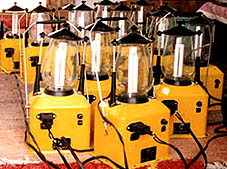
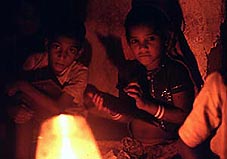
The College benefits the poorest of the poor who have no alternatives and encourages practical knowledge and skills rather than paper qualifications through a learning by doing process of education. The College provides nine different areas of programs: drinking water, night schools, health centers, solar power, environment, incom generation, traditional media, people's action, and women's group
|
 |
||
|
 |
||
|
|||

Contact Info
Address: The Director, The Barefoot College, Village Tilonia, via Madanganj, District Ajmer Rajasthan, India 305816
Phone: (91)(1463) 88204
Fax: (91)(1463) 88206
E-mail : barefoot@jp1.dot.net.in
URL: http://www.barefootcollege.org/
Strategic Partners
Social Work Research Centre, Deutsche Welthungerhilfe, European Commission, HIVOS, International Secretariat for Water, Plan International, UNDP, UNESCO, All India Handicrafts Board, CAPART, Central Social Welfare Board, Department
of Education, Government of India Department of Electronics and Department of Science, and Department of Youth Affairs & Sports, FORRAD, India Renewable Energy Development Agency, Ministry of Non-Conventional Energy Sources, Government of India Ministry of Textiles, Indian State Governments of Jammu & Kashmir, and the District Rural Development Agency of Ajmer (Rajasthan).
Legal
Notice
Founded in 1972

Updated 21 March 2001 Webmaster 2001 United Nations. Legal Notice