The Skylake Project is about universal
reconciliation. It shows there is hope we can make the entire world a better place because
we have revitalized a small part of it destroyed by man. Destruction of our planet
continues at a rapid pace.
Destruction of Northeast Thailand's forests, land, waters and
environment is as swift and comprehensive as anywhere so it was chosen as a good place to
test the theory. Comments are welcome.
The basic parameters for the technologies tested
were that they must require no credit to implement and that the persons
using them needed no special skills or talent and very little
or no formal education.
The project covered a 12-year period. In 1998,
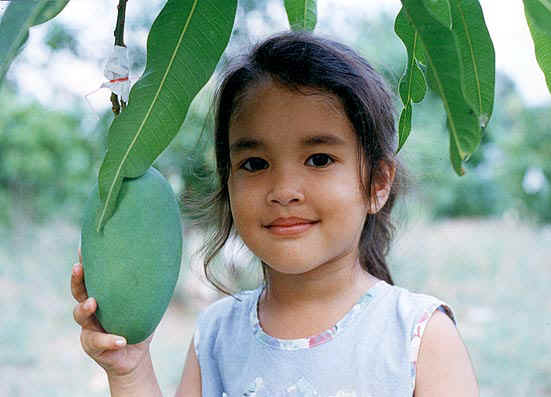
my 7-year-old daughter Patty (shown above) and I produced about 770 new
trees at our nursery in Bangkok. However,
Skylake is now so dense with trees that there is almost no room for more and many of the
trees remain in pots.
In 1999, we switched our planting priory from trees to
flowers and other decorative plants but still planted hundreds of trees. In the nursery, we bred special, rare-color and two-color varieties of aromatic
flowers as well as raising more than 750 German palm trees.
The major aspects of the project were completed in 1999.
The indigenous husband and wife team which have implemented the project from the
beginning, continue daily to do what they can to change
this part of the world.
A number of technologies were tested. Some
failed. Some worked well. We'll update this web site and expand it as often as we can. It's
designed to share the lessons learned. We think the project has been a success and hope it
proves to be a blessing to others who are looking for a way to “Change the World”.
To summarize:
Skylake
is a water, land and environment conservation, sustainable agriculture and rural
development project in Chaiyaphum, Thailand to reverse deforestation, desertification,
drought, flooding, land degradation, pollution, erosion and urban migration using
appropriate technologies.
These include ferrocement for low-cost housing and water storage,
vetiver grass to reduce forest fires and rain run-off while increasing fertility and food
production.
This was done in conjunction with organic fertilizers and
mini-sprinker irrigation to achieve reforestation and good land management by growing mango, coconut and
tamarind without insecticides or credit but lots of help from God's Son, Jesus Christ --
despite termites, scorpions, centipedes, cobras, drought and flash fires in
the dry season and floods in the rainy season. We hope you'll agree that
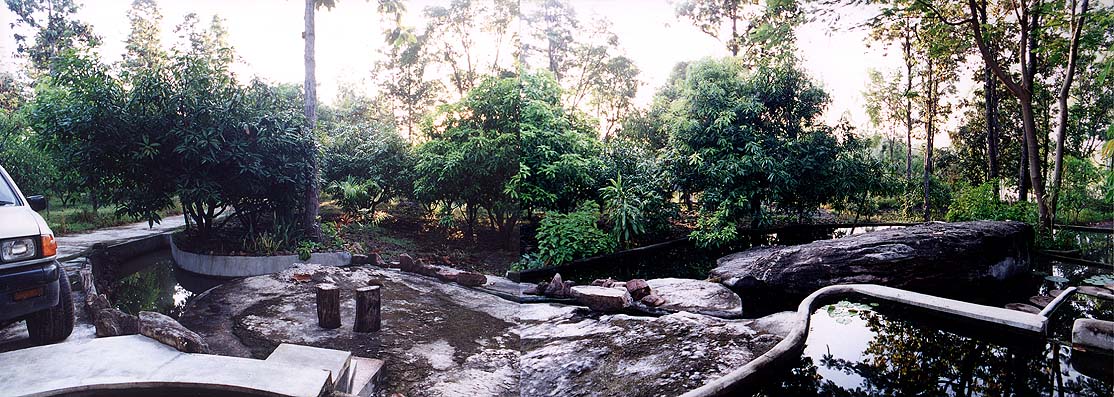
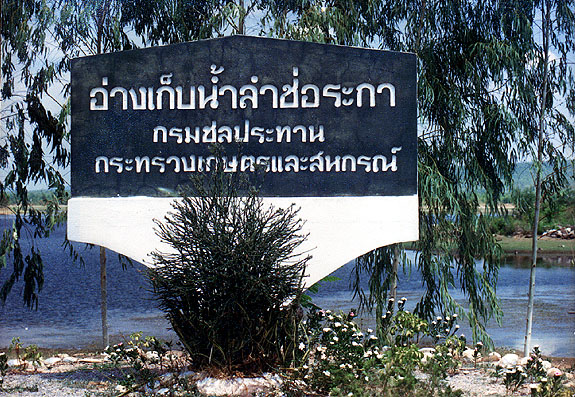
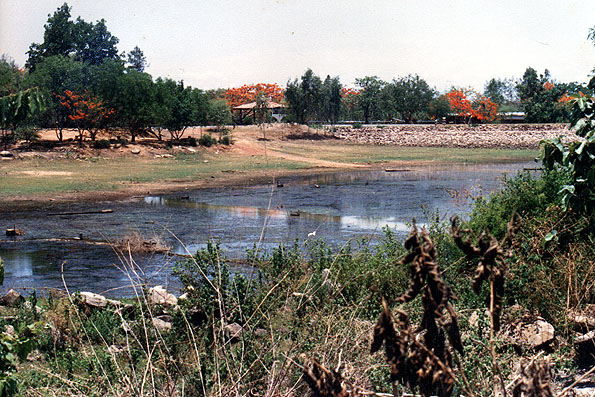
the result is a beautiful garden on a large reservoir in the mountains of Northeastern Thailand.
I suggest you begin by reading the true story
“Change the World” which inspired us to try.
Please pray for us! God bless you! |